
Confident Decisions Under Financial Pressure
By Doug Constable · 31 July 2026
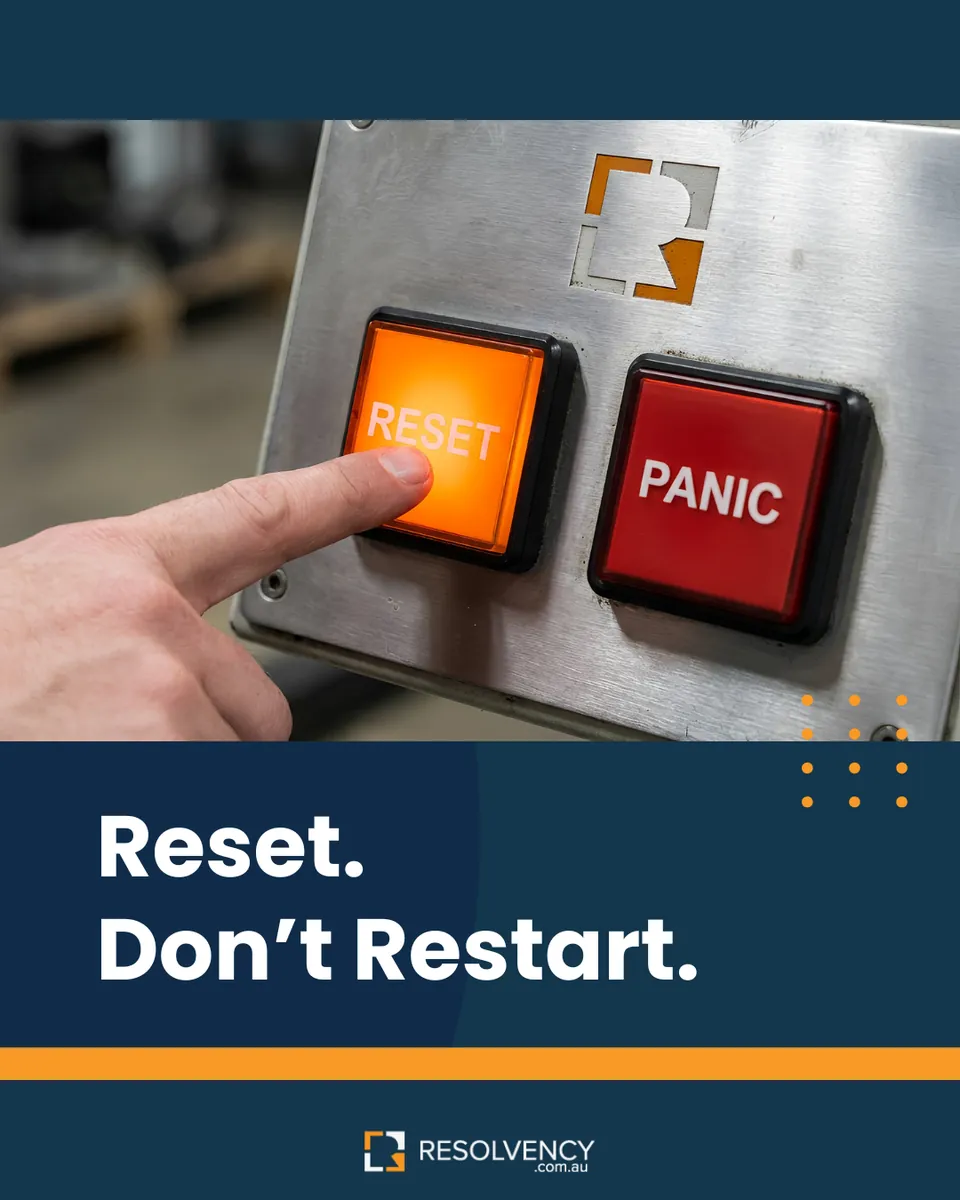
Pressure does something specific to good decision-making. It doesn't make you stupid. It makes you fast, and fast is the enemy of good when money's involved.
I've sat across the table from a lot of business owners at the exact moment the pressure hit hardest, and I've been on the other side of that table myself. Lost a business in 1988. I know what it feels like when the numbers stop making sense and every option looks equally bad. So let me tell you what I've actually seen work, because it's not what most people expect.
Panic makes the decision for you, badly
The instinct under pressure is to move. Do something. Anything. Chase the biggest fire, throw money at it, and hope the rest holds. I understand the instinct completely. It just doesn't work.
The owners who come through financial pressure in good shape aren't the ones who react fastest. They're the ones who slow down at the exact moment everything in them is screaming to speed up. That's a hard thing to do when a creditor's calling and the ATO's already sent one letter too many. But the businesses that get into real trouble are almost always the ones where every decision was made in a rush, under duress, with no time to check whether it was actually the right one.
The clarity you need is usually just visibility
Most of the panic I see isn't really about the size of the problem. It's about not knowing the size of the problem. Owners come to me with a rough sense that things are bad, but no actual number. No thirteen-week cash flow. No clear picture of what's owed, what's coming in, and when the gap actually bites.
Once you can see it, properly see it on paper, it stops being a monster in the dark and starts being a problem you can work through. That's not optimism. It's just how decision-making works. You can't make a good call on information you don't have.
One trusted voice beats five worried ones
When the pressure's on, everyone around you has an opinion. Your accountant, your partner, your mate who "went through something similar," your bank. Most of them mean well. Almost none of them are looking at your full picture, and more than a few have a stake in which way you jump.
Get one person in your corner whose only job is to look at your situation honestly and tell you the truth, even when the truth is uncomfortable. Not someone selling you a loan. Not someone who profits either way. Just a straight, independent read on where you actually stand.
Acting early keeps the options a real choice
Every option available to a business owner shrinks the longer a decision gets delayed. Restructure, negotiate, refinance, wind up on your own terms rather than someone else's, there's a version of each of these that only exists if you act while you still have room to move. Wait long enough and the choice gets made for you, by a creditor, the ATO, or a court, and you lose the thing that actually mattered: control.
That's the real cost of a panic decision, or worse, no decision at all. It's not just the immediate damage. It's that every day of hesitation closes another door.
What I do with this, in practice
I'm not the liquidator, and I don't act for your creditors. I act for you. When someone comes to me under pressure, the first thing we do is build the actual picture, cash flow, debts, timing, so the fog clears. From there, the decision usually gets a lot more obvious. Not easier. Obvious. There's a difference, and it's the difference that lets you sleep at night.
If you're in the middle of that pressure right now, the worst thing you can do is nothing, and the second worst thing is deciding fast just to make the feeling stop. Get a clear, honest read on where you stand first. Everything gets easier after that.
Doug Constable · Business Advisors · 0499 499 899 · www.resolvency.com.au
Common questions
Is it normal to feel like I can't think straight when the business is under pressure?
Completely. Financial stress hijacks judgement in a very physical way, it's not a character flaw. The fix isn't to push through it, it's to get enough clarity that you're not deciding from panic anymore.
What's the first practical step if I don't even know how bad things are?
A proper cash flow view, even a rough one, over the next thirteen weeks. Most of the panic clears the moment the actual number is on paper instead of in your head.
How we can help with this
Facing this yourself?
Start with the free guide, or talk to us directly.
Private and confidential.